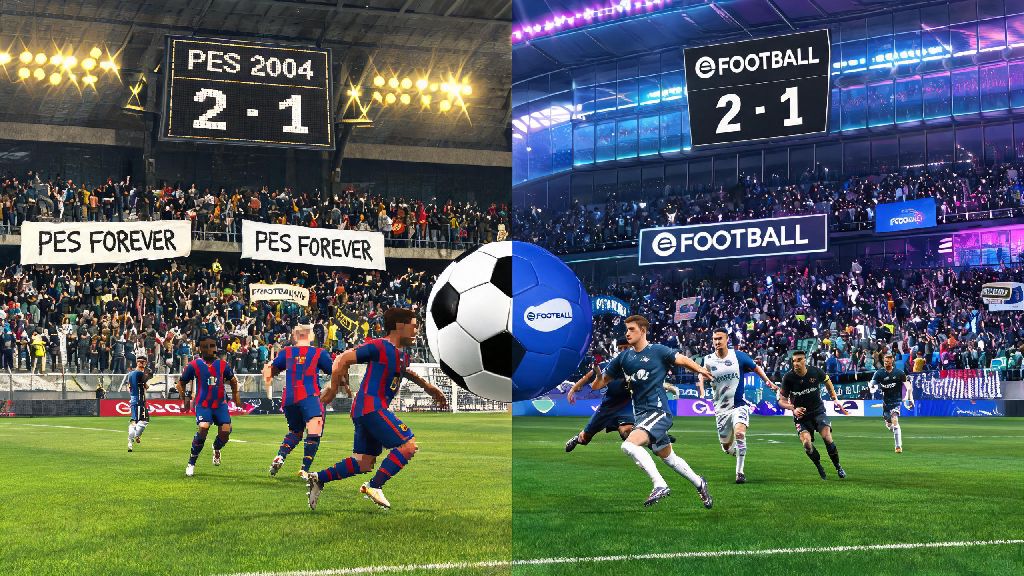
If you’ve been playing football simulation games for more than a few years, you almost certainly have fond memories of the Pro Evolution Soccer (PES) franchise. For decades, it was the go-to pick for players who preferred tight, tactical gameplay over flashy licensing deals, even if it lacked the official team and league names many casual fans wanted. But in 2021, Konami announced it was retiring the PES name entirely, replacing the annual release schedule with a new free-to-play title called eFootball. That’s why so many fans still ask why PES changed to eFootball, and whether the shift has lived up to its original promises for the franchise.
Core Reasons Why PES Changed to eFootball
Konami didn’t make the call to drop the decades-old PES brand on a whim. The decision came after years of internal testing and market research that showed the franchise was falling behind its biggest competitor, EA’s FIFA series, in both player count and global reach. The core goals of the rebrand all circled back to making the franchise more accessible to casual players while keeping the tactical depth long-time PES fans loved. There are three central drivers behind the shift:
First, the free-to-play business model removed the $60 upfront barrier that kept many casual players from trying PES each year. Instead of forcing fans to pay for a new release every 12 months, Konami could offer regular free content updates, including new rosters, game modes, and cosmetic items, with optional paid DLC for players who wanted extra content. That model was already working for popular live service games, so Konami saw it as a low-risk way to expand its player base.
Major Gameplay and Model Overhauls That Came With the Rebrand
Dropping the PES name wasn’t just a marketing move. Konami also rebuilt the entire game from the ground up, ditching its old proprietary engine in favor of Unreal Engine 5 integration that enabled far more realistic player movements, dynamic lighting, and stadium details. For long-time PES players, the first round of gameplay previews looked almost unrecognizable compared to the older PES titles, with far more natural animations for passing, tackling, and shooting.
One of the biggest upgrades that came with the shift was cross-platform save and matchmaking support. Old PES titles locked players to their console of choice, meaning you couldn’t play with friends who owned a different system or carry your progress over if you switched from PlayStation to Xbox, for example. The new eFootball model lets you access your entire team, customizations, and progress no matter what device you play on, even if you switch between console, PC, and mobile.
Konami also used the rebrand as an opportunity to lock in more official league licensing deals it had been missing for years. While old PES titles often had generic team names and kits for top leagues like the Premier League, eFootball now has official licensing for most major European leagues, as well as global tournaments and national teams, making it far more appealing to casual fans who want to play as their favorite real-world players and clubs.
Public Reception and Early Challenges of the eFootball Launch
It’s no secret that the initial launch of eFootball was a mess. The first public release was riddled with bugs, clunky animations, and missing game modes that had been staples of the PES franchise for years. Many long-time fans were furious, arguing that Konami had scrapped a beloved franchise to release a half-finished free-to-play title that felt more like a mobile cash grab than a proper football simulation. Many players at the time were so frustrated by the broken launch that they didn’t stop to ask why PES changed to eFootball in the first place, or what long-term benefits the shift could bring.
So did Konami make a mistake with the rebrand? In many cases, the early criticism was completely justified. The launch version of eFootball was nowhere near as polished as the final PES 2021 release, and it took more than a year of regular patches and content drops to get the game to a state that felt comparable to the old PES titles. A lot of older PES fans drifted away in that first year, and Konami took a major hit to its reputation in the football sim community.
That said, most of those early issues have been fixed at this point. The game now has all the core game modes PES fans loved, including Master League, MyClub (now called Dream Team), and online ranked play, and the gameplay feels far tighter and more tactical than the early launch versions. If you only tried eFootball when it first came out, you might be surprised by how much it’s improved in the years since.
How the eFootball Shift Benefited Long-Term Franchise Health
For all the early growing pains, the shift from PES to eFootball has put the franchise in a far stronger position than it was before. First, the player base has exploded since the free-to-play launch, with more than 600 million total downloads across all platforms as of 2024. That’s a massive jump from the old PES days, when the franchise sold roughly 10 to 15 million copies per annual release at most. That larger player base also means shorter matchmaking times for online modes, and a bigger pool of players to compete against at every skill level.
The live service model also lets Konami release content updates far more regularly than it could with the old annual release cycle. Instead of waiting 12 months for new rosters, gameplay tweaks, or game modes, players get live service content drops every few weeks, including limited-time tournaments, crossover events with real-world football leagues, and balance changes that fix gameplay issues almost as soon as they’re reported. You no longer have to wait a full year for a small bug that breaks through balls to get fixed, for example, since patches roll out within days of issues being identified.
Konami has also been able to invest far more in improving the game long-term, instead of splitting its development time between making a new full game every year and patching the current one. The team now focuses entirely on adding new content and refining the existing gameplay, rather than rebuilding the entire game from scratch every 12 months for the next annual PES release. That means the game will only get better over time, instead of being reset every year with new bugs and missing features.
At the end of the day, the decision why PES changed to eFootball was driven by a desire to make the franchise more accessible, competitive, and sustainable for years to come. It didn’t go as smoothly as Konami hoped, and the early launch issues are still a sore spot for many long-time fans, but the end result is a far more accessible, feature-rich football sim that’s open to players all over the world, no matter their budget or what device they own. If you haven’t tried eFootball since the early days, it’s worth giving it a second shot – you might find it has all the tactical depth you loved from old PES titles, plus a ton of new features you never knew you wanted.