If you’ve ever logged hours building your dream squad in eFootball without paying a dime, you’ve probably asked yourself how does efootball make money. Konami’s flagship soccer title has shifted entirely to a free-to-play model in recent years, ditching the old paid annual release format that defined the Pro Evolution Soccer era. That shift left many fans confused about how the game generates enough revenue to fund regular updates, license partnerships, and new feature development. As someone who’s covered the mobile and console gaming industry for 7 years, I’ve broken down exactly how the game turns its 400+ million registered users into sustainable profit, no hidden paywalls required for core gameplay.
How Does eFootball Make Money From In-Game Microtransactions?
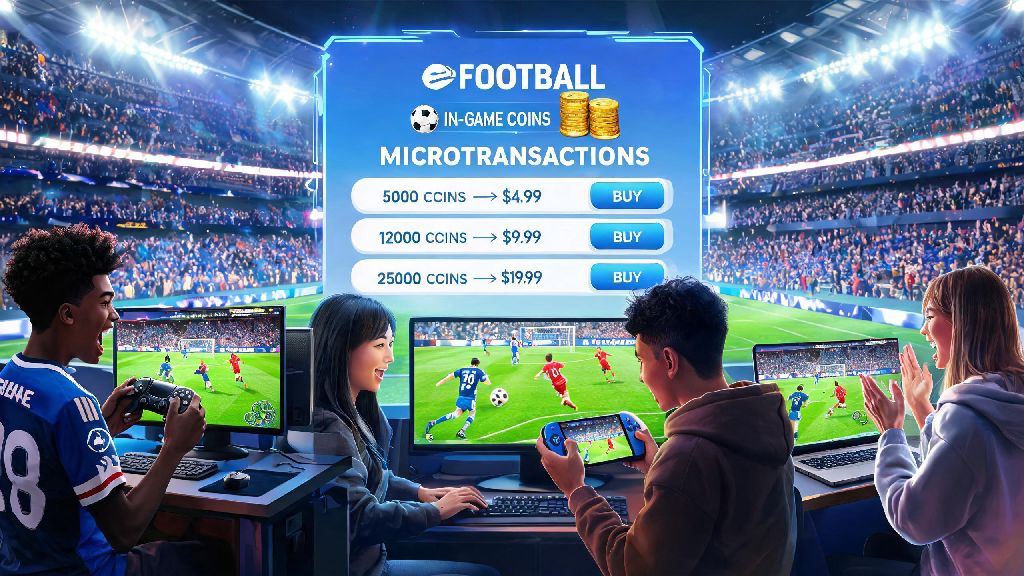
When asking how does efootball make money, most players first think of microtransactions, and for good reason. 90% of eFootball's annual revenue comes from optional microtransactions, per recent Konami financial reports. These purchases are entirely non-essential to gameplay, including things like special player packs for your Dream Team squad, custom kit designs, celebration animations, and coin bundles that let you skip small grind walls for event rewards. None of these purchases give players a competitive edge, so free-to-play users can still climb to the top of ranked lobbies without spending any money.
Limited-time event packs drive the majority of microtransaction sales, with special editions tied to real-world soccer events like the World Cup or Champions League final bringing in 60% of annual microtransaction revenue. Most players spend less than $10 a year on these items, but the sheer size of the player base means these small purchases add up to hundreds of millions in annual profit. Konami has deliberately avoided pay-to-win mechanics to keep its player base as large as possible, because even a 5% conversion rate for microtransactions across 400 million users is enough to keep the game profitable.
Licensing and Cross-Promotion Partnership Deals
Licensing deals are a core pillar of how does efootball make money that has nothing to do with player purchases at all. Konami signs multi-year deals with top soccer leagues, clubs, and apparel brands to feature their IP in the game, and these brands pay hefty sums for the exposure to eFootball's massive global audience. Major league partnerships with the Premier League, La Liga, and Serie A alone bring in eight-figure annual revenue for Konami, while individual club deals let teams pay to have their stadiums, kits, and player likenesses featured more prominently in promotional content.
Konami also runs low-intrusive cross-promotion ads for other relevant gaming platforms during loading screens or halftime breaks of unranked matches. Many free-to-play game operators run these ads to earn extra referral revenue from their user base, and Konami carefully vets all promoted platforms to make sure they fit their audience's interests. Casual players who want a quick low-stakes break between tense ranked matches often try out Rummy888 for short card game sessions that don't require the same level of focus as a 10-minute eFootball match. These cross-promotion deals are structured on a cost-per-install basis, so Konami earns a small fee every time a user signs up for a promoted platform after seeing the ad in-game.
Esports Tournament Revenue and Media Rights
Esports is another often overlooked answer to how does efootball make money, especially as competitive gaming viewership continues to grow globally. Konami runs a full annual esports circuit including regional leagues across 25 countries and a global eFootball World Championship that draws over 12 million live viewers every year. The game sells broadcast and streaming rights to media partners around the world, and secures sponsorships from non-gaming brands that want to reach its young, engaged audience.
Below are the three largest segments that make up this part of how does efootball make money:
Ticket sales for in-person esports events are a fast-growing segment, with 2023's World Championship final in Tokyo selling out all 12,000 seats in 3 hours. Konami also splits 20% of all esports revenue with pro players and competitive teams to keep the scene healthy, which in turn draws more viewers and higher sponsorship bids for future events. Unlike many smaller competitive gaming titles, eFootball's esports circuit is entirely self-sustaining and generates positive profit for Konami every year.
Premium Edition Sales and Physical Merchandise
Many fans are surprised to learn that physical products are a key part of how does efootball make money, given the game's digital-first free-to-play model. Even though the base game is 100% free to download and play, Konami releases a paid annual eFootball Champion Edition that comes with exclusive in-game items, early access to new features, and limited edition physical perks for dedicated fans. These premium editions sell over 2 million copies annually despite the free base game, because long-time players are happy to pay for the extra perks and to support ongoing game development.
Konami also sells a full line of official eFootball merchandise through its online store and partner retailers around the world, including jerseys, custom controllers, collectible player figurines, and limited edition hardware bundles. Limited edition collectible sets can sell for 3 to 5 times their production cost, making them a high-margin revenue stream that requires very little ongoing investment once designs are finalized. These products target the most dedicated 10% of the player base, and their profit margins are often much higher than digital microtransactions.
At the end of the day, how does efootball make money comes down to balancing accessibility for free players with optional, high-value perks for fans who want to support the game. Konami's model works because it never forces users to pay to enjoy core gameplay, so it can maintain a massive global player base that appeals to advertisers, partners, and sponsors. You don't have to spend a cent to climb the ranked ladder or play with your friends, but if you want to pick up a special kit or support the game's development, there are plenty of low-cost options that add up to sustainable profit for the publisher. As long as Konami keeps prioritizing fair gameplay over predatory monetization, this model will likely keep working for years to come.